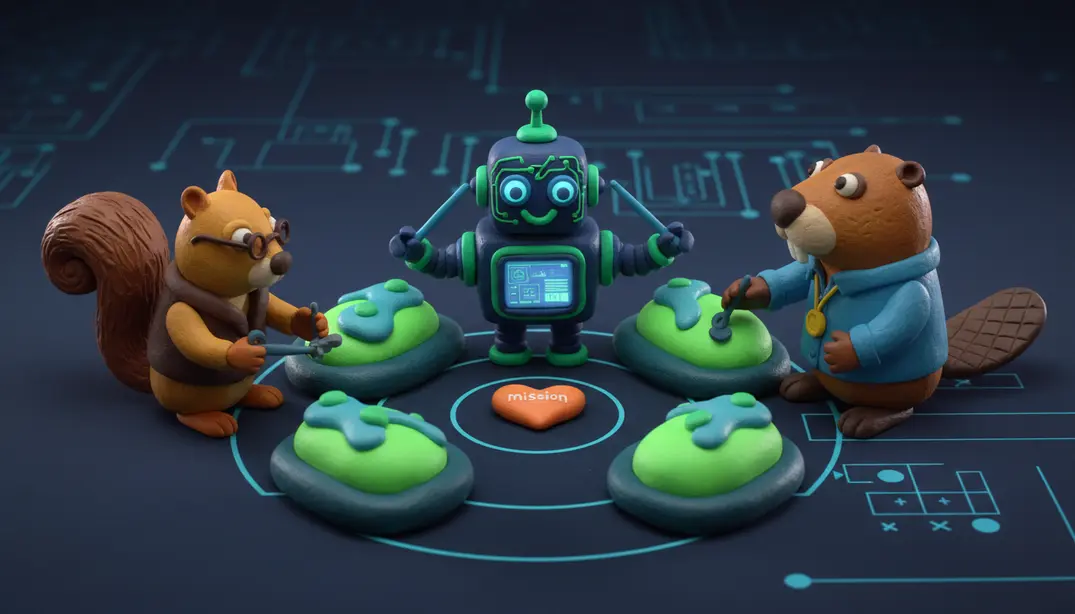
TERN: Engineering a Unified Data Ecosystem for Non-Profits
Non-profits aren't struggling with their mission. They're struggling with the infrastructure that should support it. TERN is the technical answer to two decades of watching capable organizations fight systems that were never designed for the sector.


The hardest thing about working in the non-profit sector isn’t the mission. It’s the infrastructure.
I’ve watched extraordinary organizations — mission-driven, well-led, deeply committed — spend their best operational capacity wrestling with data that doesn’t talk to each other, grant reports that require rebuilding numbers from scratch, and budgets that live in email attachments. None of this has anything to do with whether the mission is worthy. It has everything to do with the fact that the sector has been excluded from purpose-built technology for decades.
TERN is my answer to that.
The Problem Isn’t Complexity — It’s Fragmentation
What is TERN? It’s PF TECH’s non-profit back-office integration framework. Not a single app. Not a dashboard. A connected system of purpose-built capabilities that addresses the specific operational failures I’ve seen repeat themselves across every organization I’ve worked with.
The most painful is donation reconciliation. Every non-profit using a fundraising platform and an accounting system has this problem: the same gift, the same donor, the same transaction — described completely differently on each side of the ledger. Manual reconciliation is the band-aid the sector has accepted. It shouldn’t be.

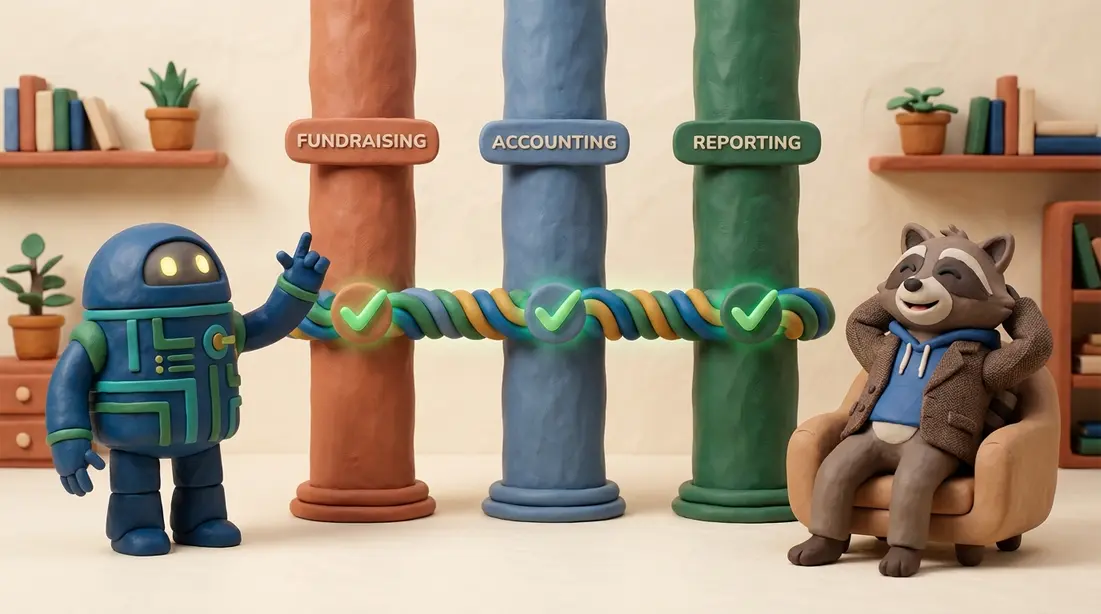
Our reconciliation and gift processing automation eliminates that manual work. It doesn’t just move data; it’s architected by an accountant to enforce proper internal controls. It de-identifies sensitive donor information before any AI processing occurs and re-identifies it only in secure environments. Privacy isn’t a feature here — it’s the architecture.
Strategic Clarity: From Data to Decisions
Once the data flows are clean, the next problem is governance. Restricted funds — grants with specific spending parameters — are the single greatest source of compliance anxiety for non-profit finance teams. The information lives in development. The compliance accountability lives in finance. The gap between them is where errors happen and where auditors find things.
TERN’s fund governance capability closes that gap. It creates a verifiable source of truth for restricted fund tracking, ensures that accounting systems reflect donor intent programmatically, and builds the audit trail that funders increasingly require.
Beyond compliance, TERN’s programme-based budgeting capability transforms what is typically a static annual exercise — Excel files passed by email — into a collaborative, auditable workflow. Multi-user, version-controlled, and designed specifically for the granular programme-level detail that non-profit budgets require.
Intelligent Orchestration: AI That Actually Understands Context
The final layer is AI — and this is where I want to be precise, because “AI for non-profits” is a phrase that has been badly overused.
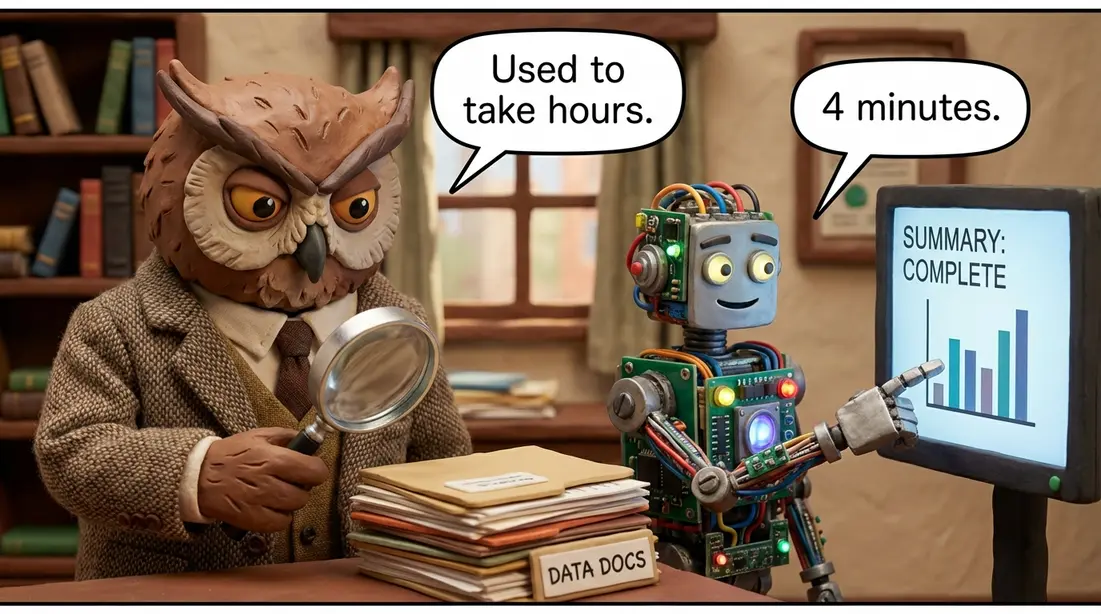
TERN’s AI capability isn’t a generic chatbot. It’s a set of contextual agents designed to orchestrate specific operational tasks within the framework — translating back-end logic into natural language, coordinating workflows across connected systems, and doing so with a human-in-the-loop principle that I consider non-negotiable. Sensitive operations require a human decision. The AI handles the coordination. That distinction matters.
For non-profits navigating increasing data privacy regulation, this architecture isn’t just responsible — it’s increasingly required.
Built With the Sector, Not For It
Every capability in TERN was built in direct response to real operational pain inside real organizations. That’s not marketing language — it’s the design constraint we work under. Our Strategic Partners aren’t just clients; they’re co-authors of the system.
If your organization’s operational overhead is consuming capacity that belongs to your mission, that’s the problem TERN was built to solve.
Ready to stop reconciling manually?
TERN is built for non-profits that are done fighting their own data. If your team is spending hours each month on reconciliation, fund tracking, or grant reporting that should be automated, let's talk.
Learn More About TERNAbout the author
Greg Zatulovsky, CPA
Founder & CEO, PF TECH · 15+ years in non-profit finance, operations & technology
Greg founded PF TECH to give Canadian non-profits access to the same operational infrastructure as the private sector — without the overhead. He writes about AI adoption, financial management, and the practical realities of running a mission-driven organisation.
You might also like

The Maker's Revolution: From Concept to Code Without the Bloat
Feb 11, 2026 · 5 min read

AI, Data Sovereignty, and the Modern Tech Stack
Feb 11, 2026 · 6 min read

From 5-Year Roadmap to Reality: How AI is the Non-Profit Force Multiplier
Feb 11, 2026 · 4 min read